Classic pesto blends fresh basil with olive oil, garlic, pine nuts and parmesan or romano into a bright green herb sauce, and either a blender or a food processor does nearly all of the work. A batch starts with 2 cups of packed basil leaves, makes about 1 1/4 cups and is the right amount of sauce for one pound of fresh pasta.
The order in which the ingredients go in depends on the machine. A blender is loaded with the liquid first: olive oil at the bottom, then cheese, garlic and basil, with the pine nuts on top. In a food processor the cheese and pine nuts are ground first, the oil is drizzled in, and the garlic and basil are added last. Either way, salt and pepper are stirred in at the end, to taste.
Because pesto is never cooked, it is best eaten within a few days. A thin layer of olive oil smoothed over the top keeps it green in the refrigerator, and small portions frozen in jars or ice cube trays keep for months.
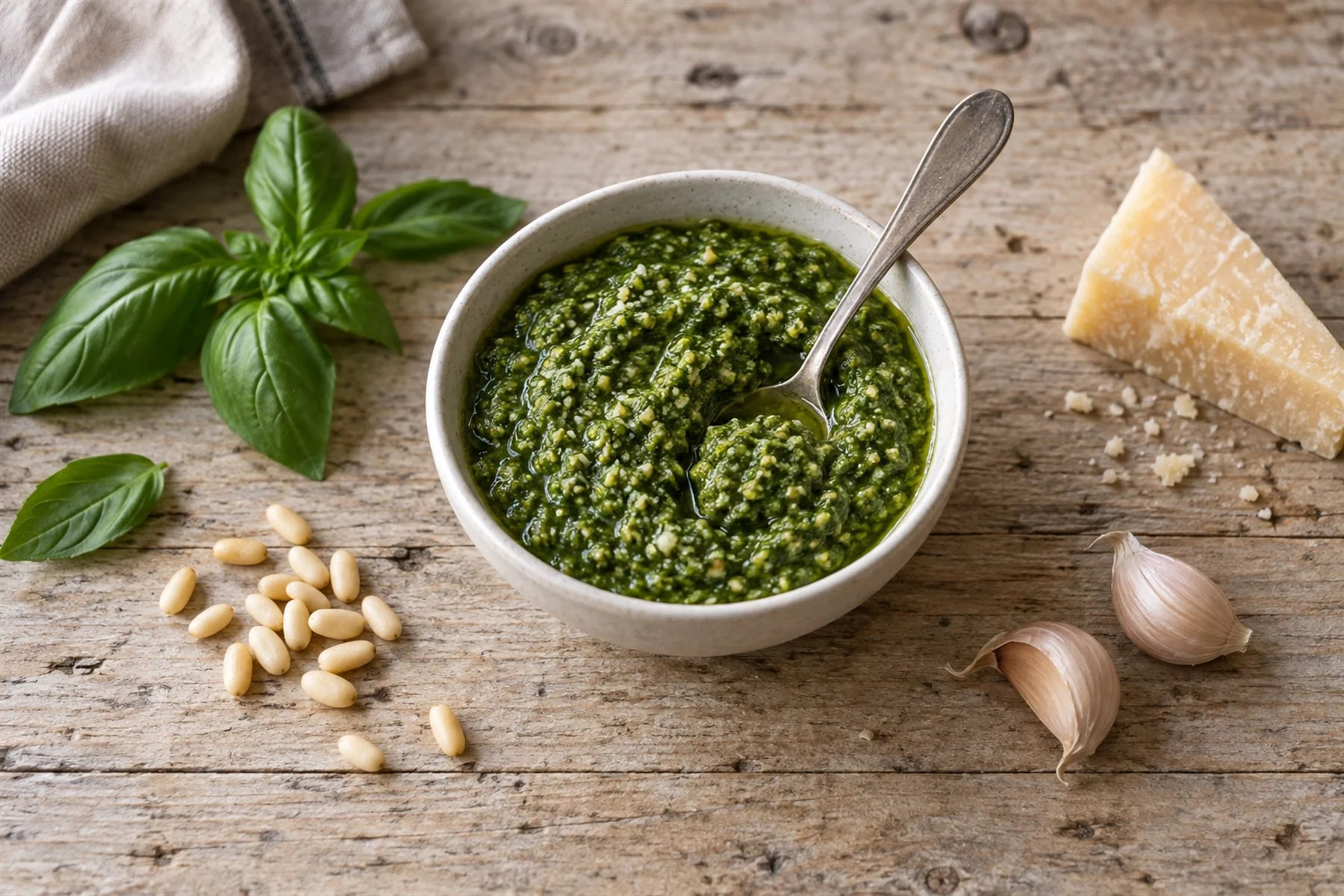
Classic Pesto
Ingredients
Method
- Layer everything except the salt and pepper into the blender jar, starting with the olive oil and then adding cheese, garlic, basil and finally pine nuts. Secure the lid.
- Blend on HIGH until the pesto is as smooth or as coarse as you like. On a Vitamix, start at Variable 1, turn the dial up to 7 and let it run for 1 minute.
- Scrape the pesto into a container and stir in sea salt and pepper until it tastes right.
- Put the cheese and pine nuts in the food processor and process for a few seconds.
- With the olive oil going in as a thin drizzle, keep processing until the mixture is as thick or loose as you want it.
- Add the garlic first and the basil second, running the machine thoroughly after each, and continue until smooth.
- Spoon the finished pesto into an airtight container, then add salt and pepper to taste.