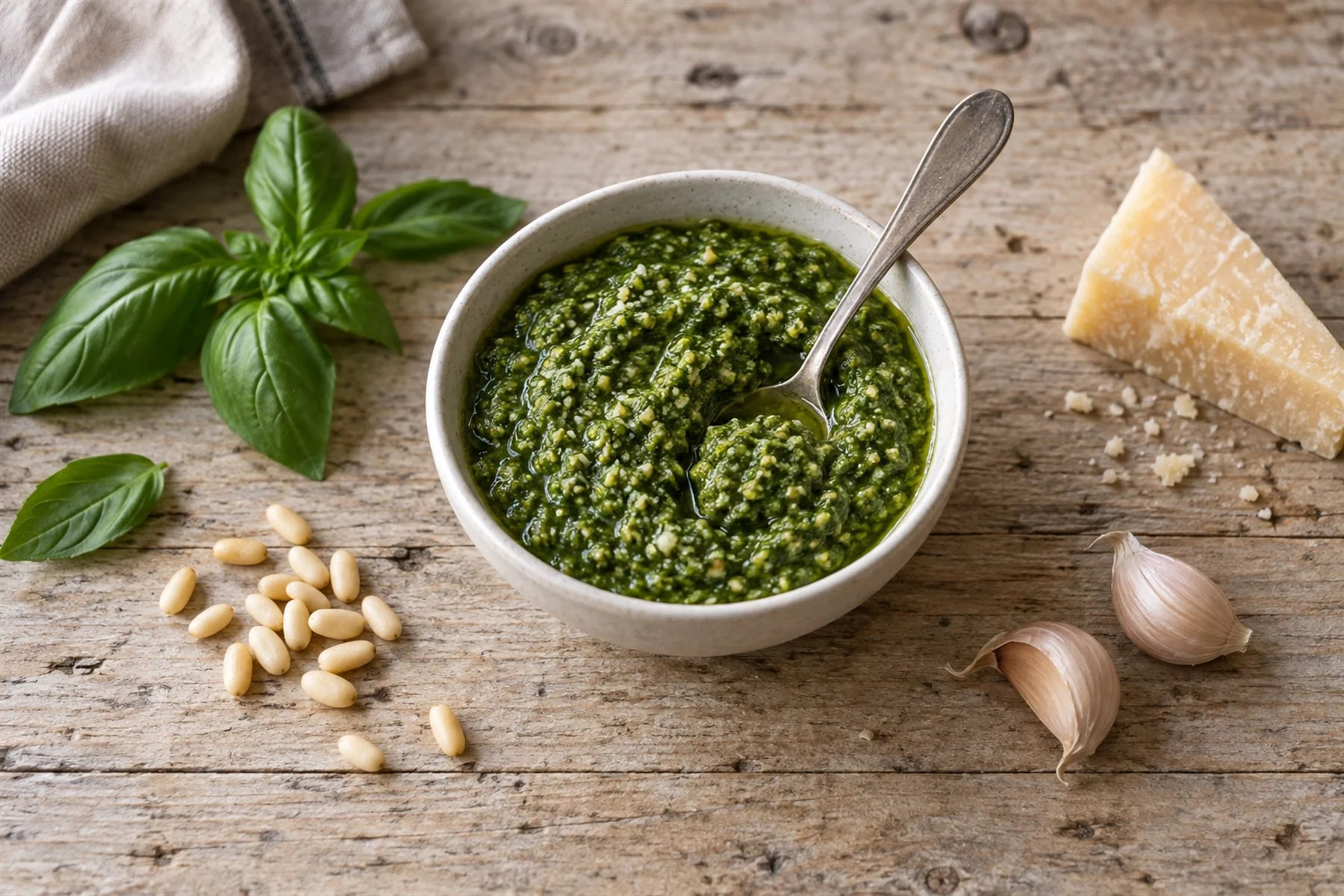
Ingredients
Method
In a blender
- Layer everything except the salt and pepper into the blender jar, starting with the olive oil and then adding cheese, garlic, basil and finally pine nuts. Secure the lid.
- Blend on HIGH until the pesto is as smooth or as coarse as you like. On a Vitamix, start at Variable 1, turn the dial up to 7 and let it run for 1 minute.
- Scrape the pesto into a container and stir in sea salt and pepper until it tastes right.
In a food processor
- Put the cheese and pine nuts in the food processor and process for a few seconds.
- With the olive oil going in as a thin drizzle, keep processing until the mixture is as thick or loose as you want it.
- Add the garlic first and the basil second, running the machine thoroughly after each, and continue until smooth.
- Spoon the finished pesto into an airtight container, then add salt and pepper to taste.
Notes
Makes about 1 1/4 cups, the right quantity for one pound of fresh pasta (4 servings).
Dry the basil thoroughly in a salad spinner or between towels; water left on the leaves makes the pesto thin and watery.
The pesto benefits from resting for roughly an hour between making and serving.
A simple way to serve it is over hot pasta straight from the pot. A few tablespoons of the pasta cooking water help it coat the noodles evenly.
Walnuts can replace the pine nuts.
Storage: pesto is a raw mixture of garlic and herbs in oil, so keep it in the refrigerator and use it within 3 days. Smooth the top and cover it with a thin layer of olive oil to stop it darkening. For longer storage, freeze it in small jars, leaving 1/2 inch of headspace, or in ice cube trays, for up to 3 months. Do not keep it at room temperature.