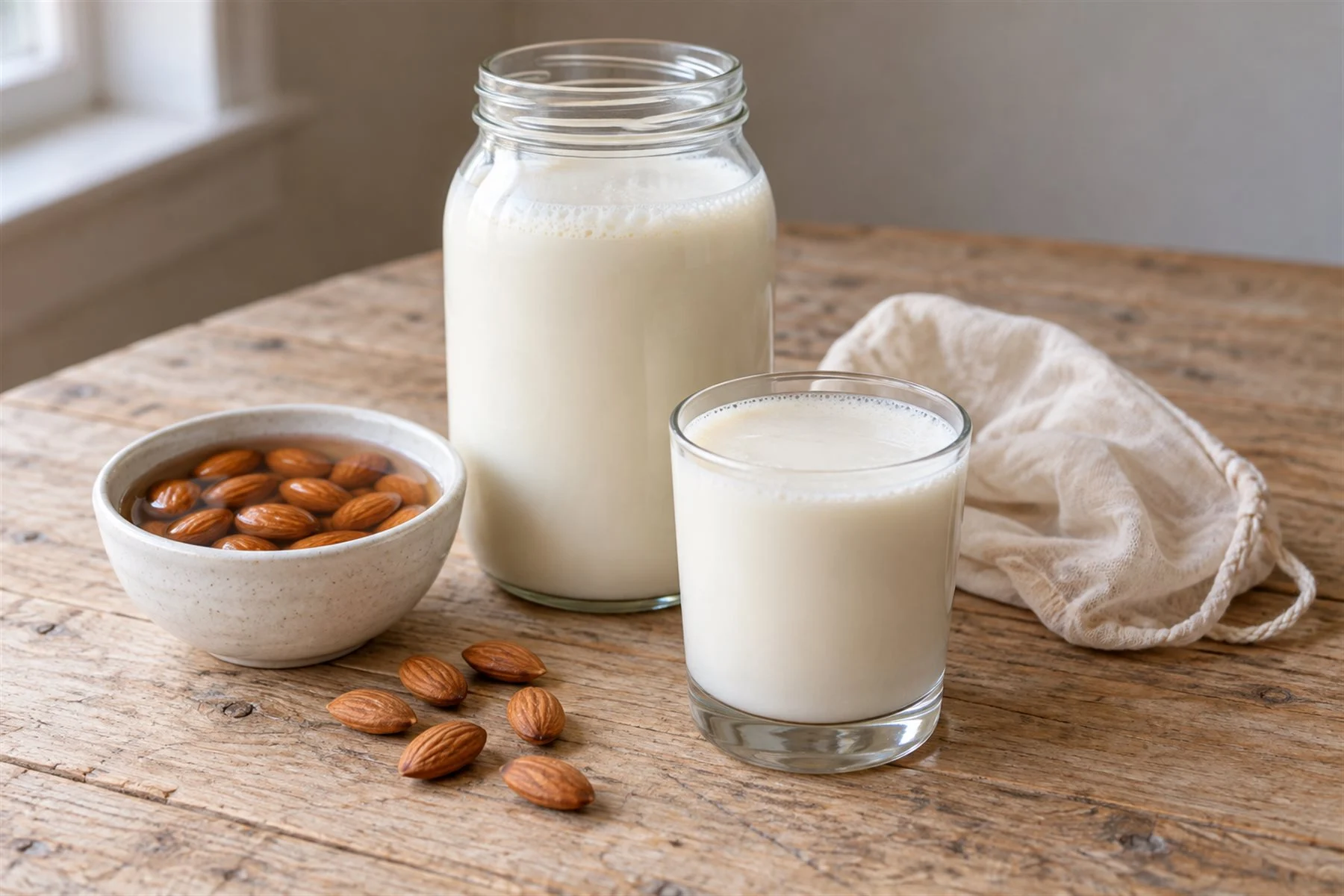
Homemade almond milk needs two ingredients, raw almonds and water, plus a blender and a nut milk bag. One cup of almonds is soaked overnight, drained, blended with 4 cups of cold filtered water for a minute or two and strained. The result is about 4 cups of creamy dairy-free milk for drinking, cereal, smoothies, coffee and most recipes that call for milk.
Soaking is what makes the milk smooth. Almonds that have taken up water for 8 to 12 hours are plump and soft, so they break down much more completely in the blender and give up more of their flavor and body to the liquid. The soaking water is poured off and the almonds rinsed, because it carries a bitter, tannic taste from the skins.
Salt, vanilla and sweetener are optional, as in the site’s basic hemp milk, and the richness is easy to adjust: 3 cups of water gives a richer, creamier milk, 4 cups an everyday one. There are no stabilizers, so the milk separates as it stands and simply needs a shake.
Homemade Almond Milk
Ingredients
Method
- Put the almonds in a bowl or jar and add enough water to cover them by about 2 inches. Cover and soak for 8 to 12 hours. Soak in the refrigerator if the kitchen is warm or the soak will go past 8 hours.
- Drain the almonds, discard the soaking water, and rinse the almonds well under cold running water.
- Put the 4 cups of cold filtered water in the blender jar, then the salt, vanilla and dates or sweetener if using, and the drained almonds last.
- Blend on high for 1 to 2 minutes, until the almonds are ground very fine and the liquid is white and opaque. A high-speed blender needs about 1 minute; a standard blender needs the full 2 minutes.
- Hang a nut milk bag inside a large clean bowl or wide-mouth jar and pour the milk in slowly.
- Gather the top of the bag closed and squeeze firmly with clean hands, working from the top down, until the pulp left inside is fairly dry.
- Pour the milk into a clean glass jar or bottle with an airtight lid and refrigerate. Shake before each use.