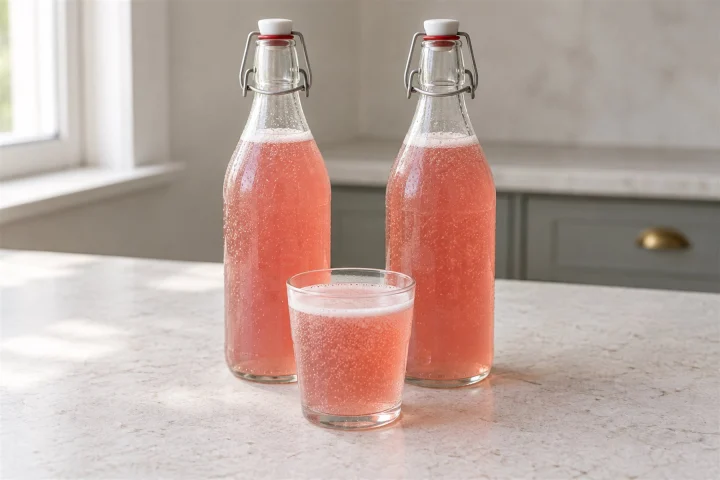
Water kefir is a lightly carbonated fermented drink made by leaving water kefir grains in sugar water for a day. The grains, also called tibicos or Japanese water crystals, are a culture of live bacteria and yeast. As the culture consumes the sugar it gives off carbon dioxide, which is where the fizz comes from, along with lactic acid and some alcohol (ethanol).
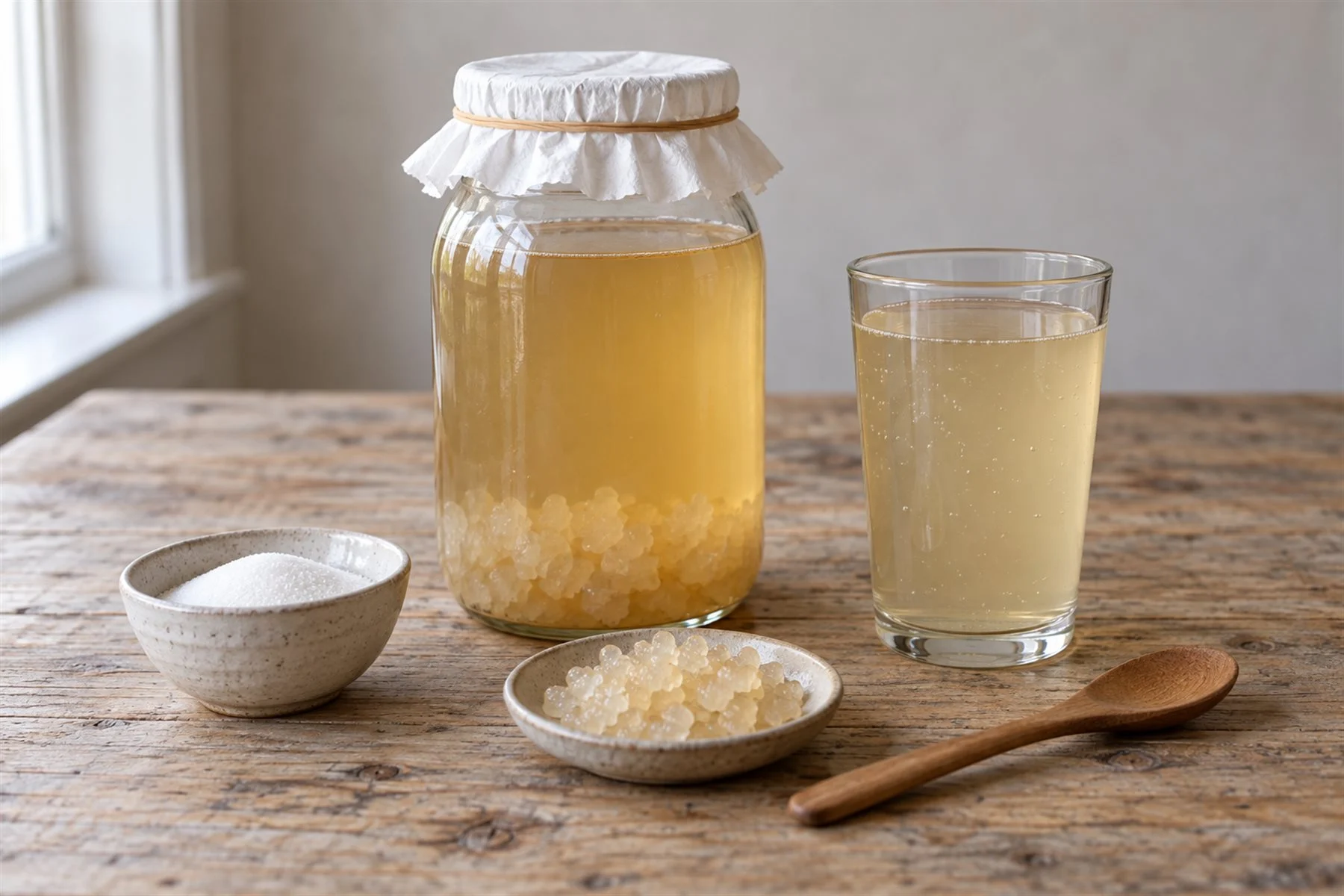
Grains are sold fresh or dehydrated. Fresh grains usually arrive packed in liquid and should be drained and rinsed before the first batch; dehydrated grains have to be rehydrated first, following the supplier’s directions. This method uses 1/4 cup of grains in 3 cups of de-chlorinated water sweetened with 1/4 cup of organic sugar and a touch of molasses. Do not use honey in place of the sugar.
Three optional extras are included to help the grains grow: half a sterilized egg shell, a tiny amount of sea salt and just a pinch of baking soda. The jar ferments at room temperature for 24 hours, or up to 48 hours in a cool room, and marking the level of the grains on the outside of the jar makes it easy to see how much they have multiplied.
Water Kefir
Ingredients
Method
- Pour about 1 cup of the water into a clean 1-quart glass jar, such as a mason jar, and add the sugar. Using a wooden spoon, stir until no undissolved sugar is left; slightly warm water dissolves it faster.
- Add room temperature water until the level reaches the jar’s 3-cup mark. The sugar water should be at room temperature, not warm, before the grains go in.
- Stir in the molasses, along with the sea salt and baking soda if using, until everything has dissolved.
- Add the water kefir grains, then slip in the egg shell if using.
- Cover the mouth of the jar with a coffee filter or a piece of tightly woven cloth and secure it with a rubber band. Set the jar somewhere dark at room temperature, ideally 68 to 78°F, and away from the heat of the stove.
- Let it ferment for 24 hours. It is ready when it tastes clearly less sweet than the sugar water and slightly tangy. In a cool room this can take up to 48 hours, but do not leave the grains in the same sugar water any longer than that, or they start to starve and weaken.
- Pour the contents through a plastic or stainless steel strainer into a clean jar to separate the grains from the liquid. Drink the finished water kefir as it is, use it in recipes, or bottle it with fruit juice for a second ferment.
- For the next batch, make up the sugar solution again and return the reserved grains to it right away.