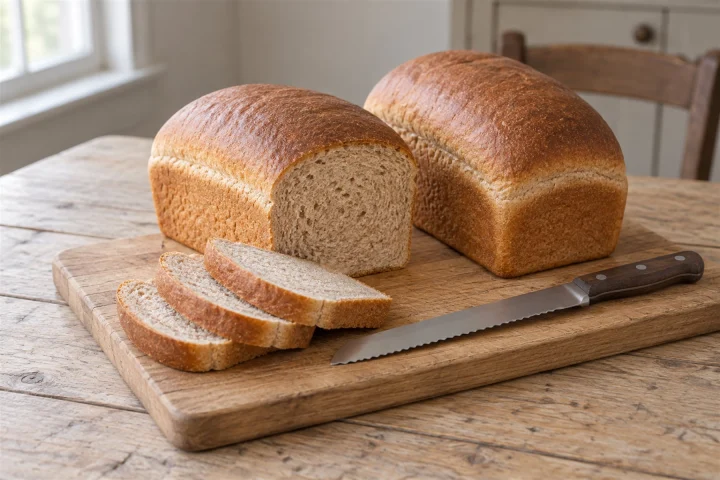
Sponge white bread is a plain white loaf made in two stages. Half of the flour is first beaten with all of the water and the yeast into a thick batter, the sponge, and left to ferment for an hour. Only then are the salt, sugar, butter and the rest of the flour added and the dough kneaded by hand on a floured board.
The head start pays off in several ways. The yeast multiplies in the loose, salt-free batter, so the later rises are quick and even. The flour in the sponge is fully hydrated before kneading begins, which makes the dough easier to handle, and the extra fermentation time gives a plain loaf more flavor and a crumb that stays soft a little longer.
The recipe makes two loaves in 8 1/2 x 4 1/2-inch pans from 6 cups of flour, and needs no mixer. For a deeper flavor, the sponge can be made the night before with less yeast and kept in the refrigerator (see the notes). The same dough can also be shaped into rolls; for a richer bun dough, see these homemade burger buns.
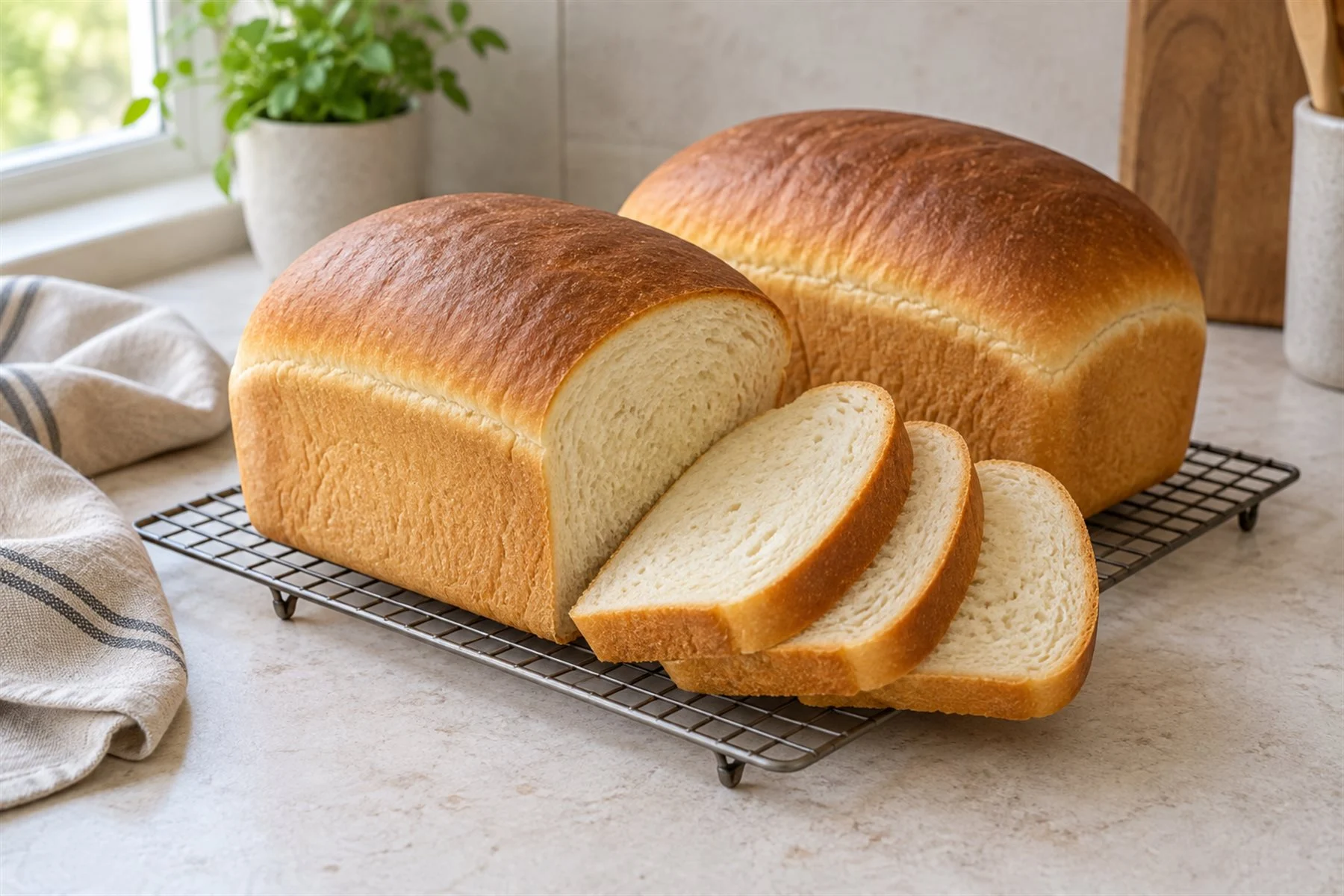
Basic Sponge White Bread
Ingredients
Method
- Pour the 2 cups warm water into a large mixing bowl. Sprinkle the yeast over it, stir, and let it stand for 5 minutes until the yeast has dissolved.
- Add the 3 cups of flour for the sponge and beat with a wooden spoon for about 2 minutes, until the batter is smooth and stretchy.
- Cover the bowl with a plate or plastic wrap and leave it in a warm place for 1 hour. The sponge is ready when it has roughly doubled and the surface is covered with bubbles.
- Stir the sponge down. Add the 2 tablespoons sugar, 2 1/2 teaspoons salt and 3 tablespoons softened butter and stir them in.
- Add the remaining 3 cups of flour, about a cup at a time, stirring until the dough becomes too stiff for the spoon and pulls away from the side of the bowl.
- Turn the dough out onto a floured board. Knead for 8 to 10 minutes, pushing the dough away with the heel of the hand, folding it back and giving it a quarter turn each time. Dust the board with only as much of the extra 1/4 cup flour as needed to stop sticking. The dough is ready when it is smooth, springy and no longer sticky.
- Shape the dough into a ball, put it in a buttered bowl and turn it once to coat. Cover and let rise in a warm place until doubled, 45 to 60 minutes.
- Butter two 8 1/2 x 4 1/2-inch loaf pans.
- Press the dough down to deflate it and divide it into two equal pieces. Pat each piece into a rectangle about 8 inches wide, roll it up tightly from a short side, pinch the seam closed and set it seam side down in a pan.
- Cover the pans loosely and let the loaves rise until the dough crowns about 1 inch above the rims, 35 to 45 minutes. Meanwhile, heat the oven to 375°F.
- Bake for 30 to 35 minutes, until the loaves are deep golden brown and sound hollow when tapped on the bottom, or until an instant-read thermometer in the center reads 190 to 200°F.
- Turn the loaves out of the pans at once and cool them completely on a wire rack, at least 1 hour, before slicing.