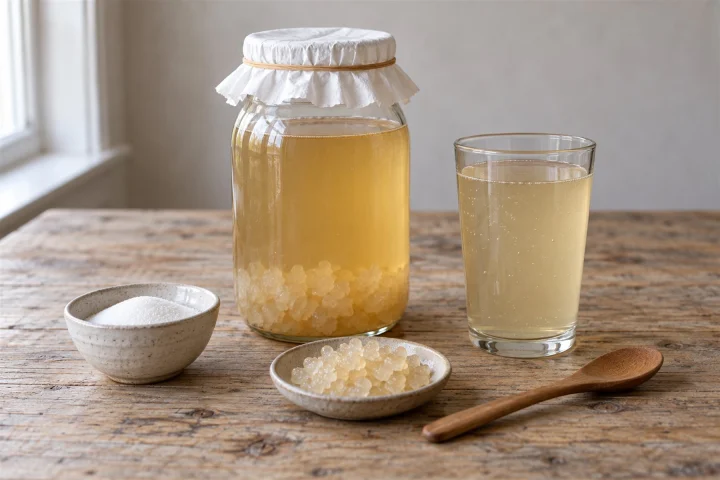
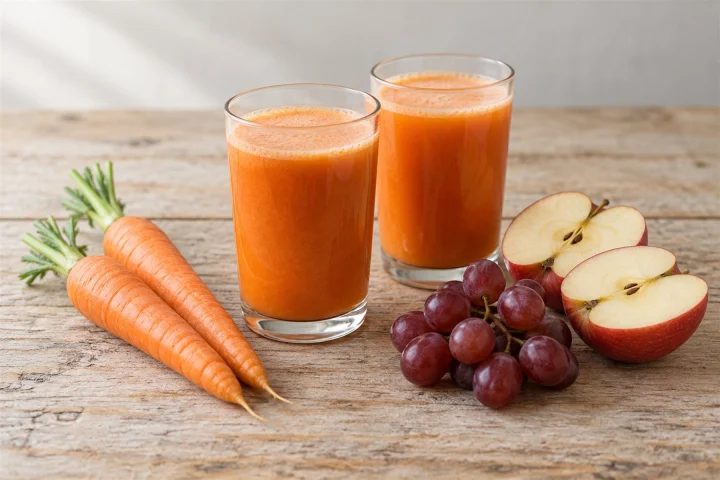
Water kefir soda is a naturally fizzy homemade drink made by bottling finished water kefir with fruit juice and letting it ferment a second time. This recipe uses 3 cups of water kefir and 1 cup of juice, split between two bottles, and because you choose the juice, you also decide how sweet the soda turns out.
The fizz develops after the bottles are capped, as the live culture feeds on the sugar in the juice and gives off carbon dioxide. A 24-hour ferment is the baseline; going to 48 hours builds more carbonation and uses up more of the sugar, and the extra time also deepens the fermented taste. Once the soda is fizzy, it goes into the refrigerator, where the cold slows fermentation right down.
Bottle choice matters because pressure keeps building inside a sealed bottle for as long as it stays warm. Use bottles whose manufacturer states they are suitable for carbonated drinks or fermentation: a wire-bail swing top alone does not make a bottle pressure-safe, and some clip-top bottles are sold for still liquids only. Fill each bottle short of the brim, burp the bottles at least once a day, and refrigerate them as soon as they are fizzy.
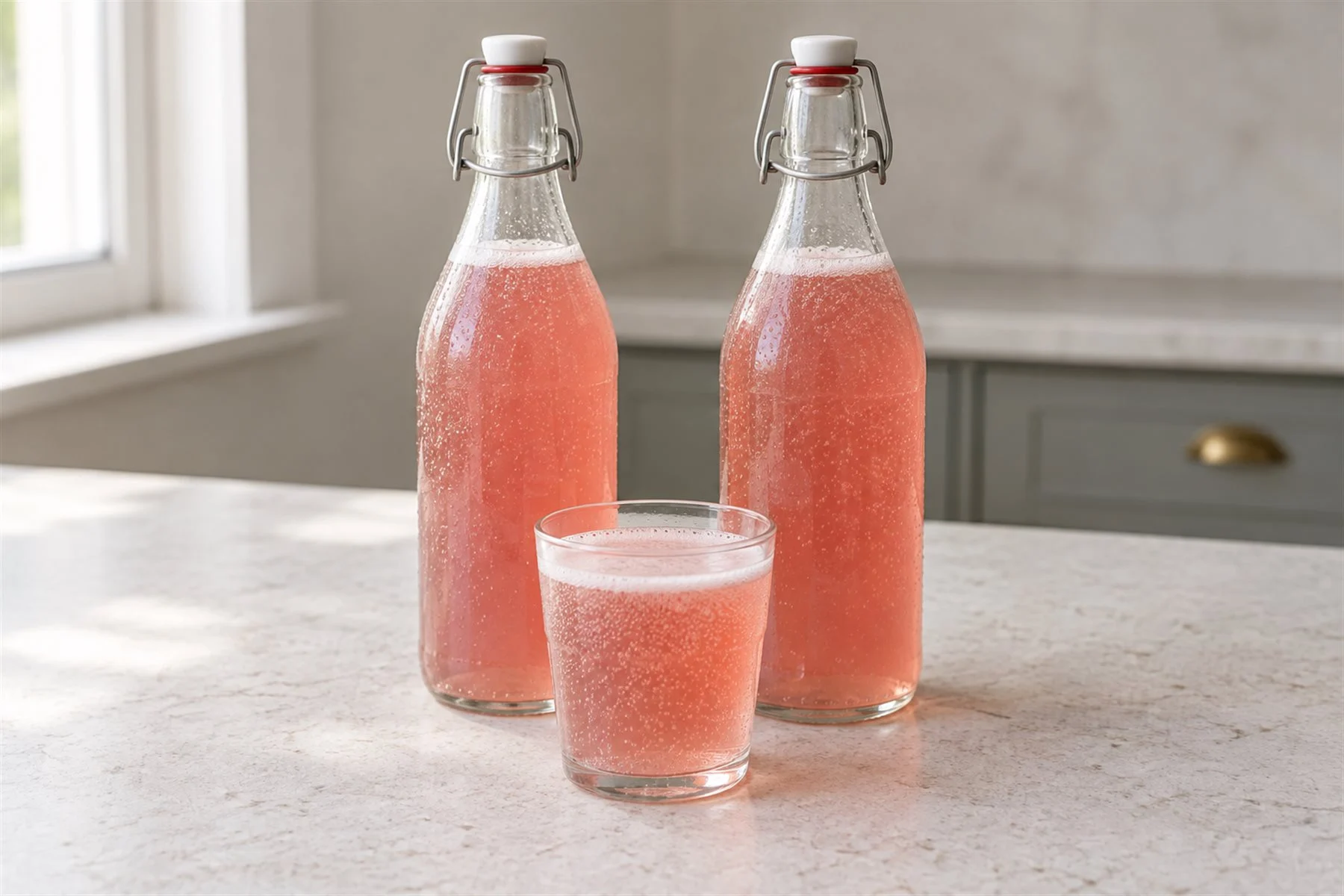
Water Kefir Soda Pop
Ingredients
Method
- Check two swing-top bottles that hold at least 17 ounces (500 ml) each. Their manufacturer should state that they are suitable for carbonated drinks (bottles sold for home brewing or fermenting usually are); if the packaging or product information does not say so, choose different bottles. They should be free of chips and cracks, with gaskets in good condition. Wash them in hot, soapy water and rinse well.
- Using a funnel, pour 1/2 cup of fruit juice into each bottle.
- Top up each bottle with 1 1/2 cups of water kefir, leaving about 1 inch of empty space at the top, and close the swing tops.
- Leave the bottles at room temperature, out of direct sun, for 24 hours. As a precaution, keep them in a closed cupboard or a lidded box while they ferment.
- After 24 hours, burp the bottles: hold each one over the sink, pointed away from anyone’s face, and open the top slowly to let the gas escape, then close it again. A lively hiss means the soda is ready. If there is little or no hiss, leave the bottles out for up to 24 hours more, burping them again at least once a day.
- As soon as the soda is fizzy, move both bottles to the refrigerator and chill for at least 2 hours before serving. Open them slowly over the sink, since the soda can foam up.