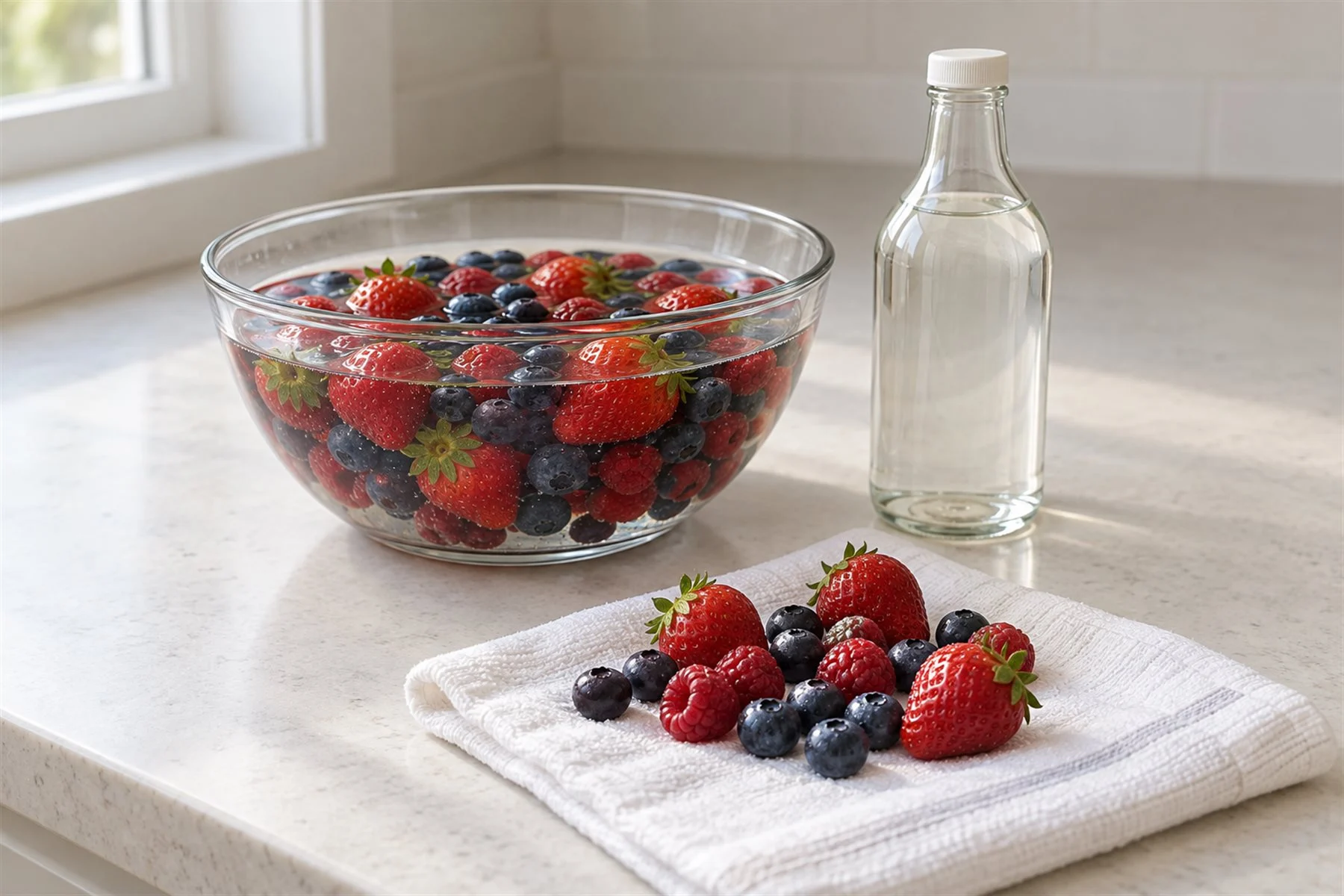
A quick vinegar wash helps prevent moldy berries, slowing the fuzz that can otherwise show up on fresh fruit only days after purchase. The only supplies are vinegar and cold water, mixed at a ratio of ten parts water to one part vinegar; 5 cups of water and 1/2 cup of vinegar are enough for 2 pints of berries.
The berries get a brief dip of about a minute in the solution, followed by a rinse in clean cold water, thorough drying and storage in a clean airtight container in the refrigerator. The wash delays molding and spoilage rather than stopping it, which makes it practical to buy berries in quantities larger than a pint at once.
Vinegar Wash for Fresh Berries
A quick soak in a 10-to-1 solution of cold water and vinegar, followed by a rinse and a thorough drying, to delay mold on fresh berries stored in the refrigerator.
Yield: 2 pints of berries
Materials
- 5 cups cold water
- 1/2 cup distilled white vinegar or apple cider vinegar
- 2 pints (about 4 cups) fresh berries
Instructions
- In a large clean bowl, stir together the cold water and vinegar, which is ten parts water to one part vinegar.
- Tip in the berries and move them gently through the liquid until every berry has been coated.
- Leave the berries in the solution for about a minute, then drain them in a colander.
- Rinse the berries with clean, cold water.
- Dry the berries well: spread them on a clean towel or paper towels and blot them gently, or spin sturdy berries such as blueberries and strawberries in a salad spinner lined with paper towels.
- Keep the berries in the refrigerator in a clean container that seals airtight, lined with a paper towel to absorb any leftover moisture.
Notes
Drying thoroughly matters as much as the wash itself, because moisture left on the fruit encourages mold.
For other amounts, keep the same ratio: for example, 2 1/2 cups of water and 1/4 cup of vinegar for a single pint.
Leave the hulls on strawberries until just before eating, so water does not soak into the fruit.
Raspberries and blackberries are delicate. Swirl them gently and dry them on towels rather than in a salad spinner.
The wash slows mold but does not stop it. Check the container every day or two and remove any soft or moldy berries.