Ingredients
Method
Make the sponge
- Pour the 2 cups warm water into a large mixing bowl. Sprinkle the yeast over it, stir, and let it stand for 5 minutes until the yeast has dissolved.
- Add the 3 cups of flour for the sponge and beat with a wooden spoon for about 2 minutes, until the batter is smooth and stretchy.
- Cover the bowl with a plate or plastic wrap and leave it in a warm place for 1 hour. The sponge is ready when it has roughly doubled and the surface is covered with bubbles.
Make the dough
- Stir the sponge down. Add the 2 tablespoons sugar, 2 1/2 teaspoons salt and 3 tablespoons softened butter and stir them in.
- Add the remaining 3 cups of flour, about a cup at a time, stirring until the dough becomes too stiff for the spoon and pulls away from the side of the bowl.
- Turn the dough out onto a floured board. Knead for 8 to 10 minutes, pushing the dough away with the heel of the hand, folding it back and giving it a quarter turn each time. Dust the board with only as much of the extra 1/4 cup flour as needed to stop sticking. The dough is ready when it is smooth, springy and no longer sticky.
- Shape the dough into a ball, put it in a buttered bowl and turn it once to coat. Cover and let rise in a warm place until doubled, 45 to 60 minutes.
Shape and bake
- Butter two 8 1/2 x 4 1/2-inch loaf pans.
- Press the dough down to deflate it and divide it into two equal pieces. Pat each piece into a rectangle about 8 inches wide, roll it up tightly from a short side, pinch the seam closed and set it seam side down in a pan.
- Cover the pans loosely and let the loaves rise until the dough crowns about 1 inch above the rims, 35 to 45 minutes. Meanwhile, heat the oven to 375°F.
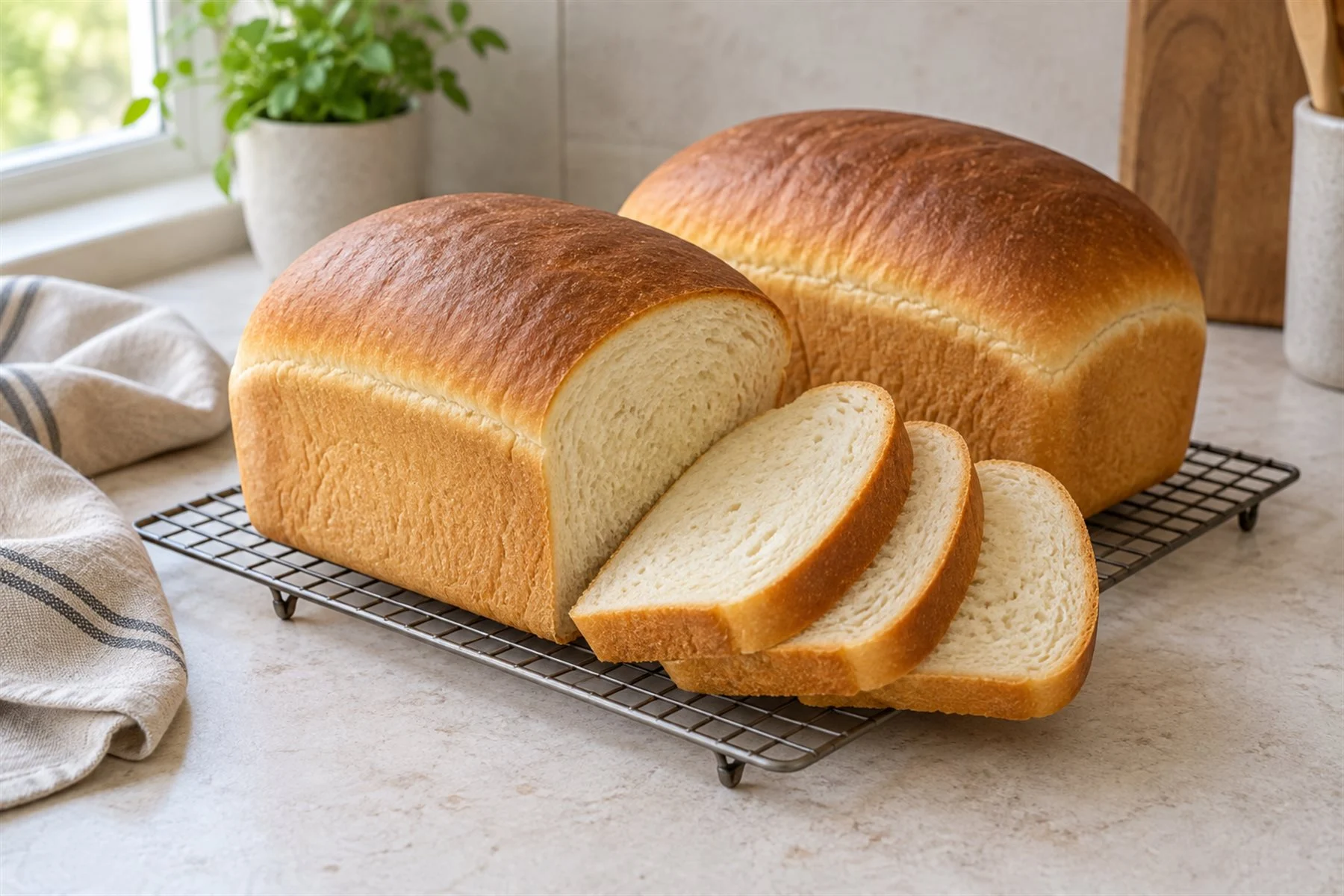
- Bake for 30 to 35 minutes, until the loaves are deep golden brown and sound hollow when tapped on the bottom, or until an instant-read thermometer in the center reads 190 to 200°F.
- Turn the loaves out of the pans at once and cool them completely on a wire rack, at least 1 hour, before slicing.
Notes
Instant yeast can be used in the same amount; stir it straight into the sponge with the flour. Rising times may be slightly shorter.
Overnight sponge: for a fuller flavor, make the sponge the evening before with only 1/4 teaspoon of the yeast and save the rest of the packet (about 2 teaspoons) for the dough; a whole packet would over-ferment the sponge during a long rest. Mix the sponge as directed, leave it covered at room temperature for 1 to 2 hours, until the first bubbles appear, then refrigerate it for 8 to 16 hours. Next day, let it stand at room temperature for 1 hour. It will be bubbly and may have risen and sunk back, which is fine. Stir in the saved yeast with the sugar, salt and butter (dissolve active dry yeast in 2 tablespoons of warm water first) and continue with the recipe; the rising times stay about the same.
For a softer, thinner crust, brush the tops of the hot loaves with a little butter as soon as they come out of the pans.
For rolls, divide half of the dough into 8 pieces, shape into balls, let rise on a greased baking sheet for about 30 minutes and bake at 375°F for 15 to 18 minutes, until golden brown and 190°F in the center.
Keep the cooled bread in a bag at room temperature for 2 to 3 days. The second loaf freezes well, whole or sliced, for up to 3 months.