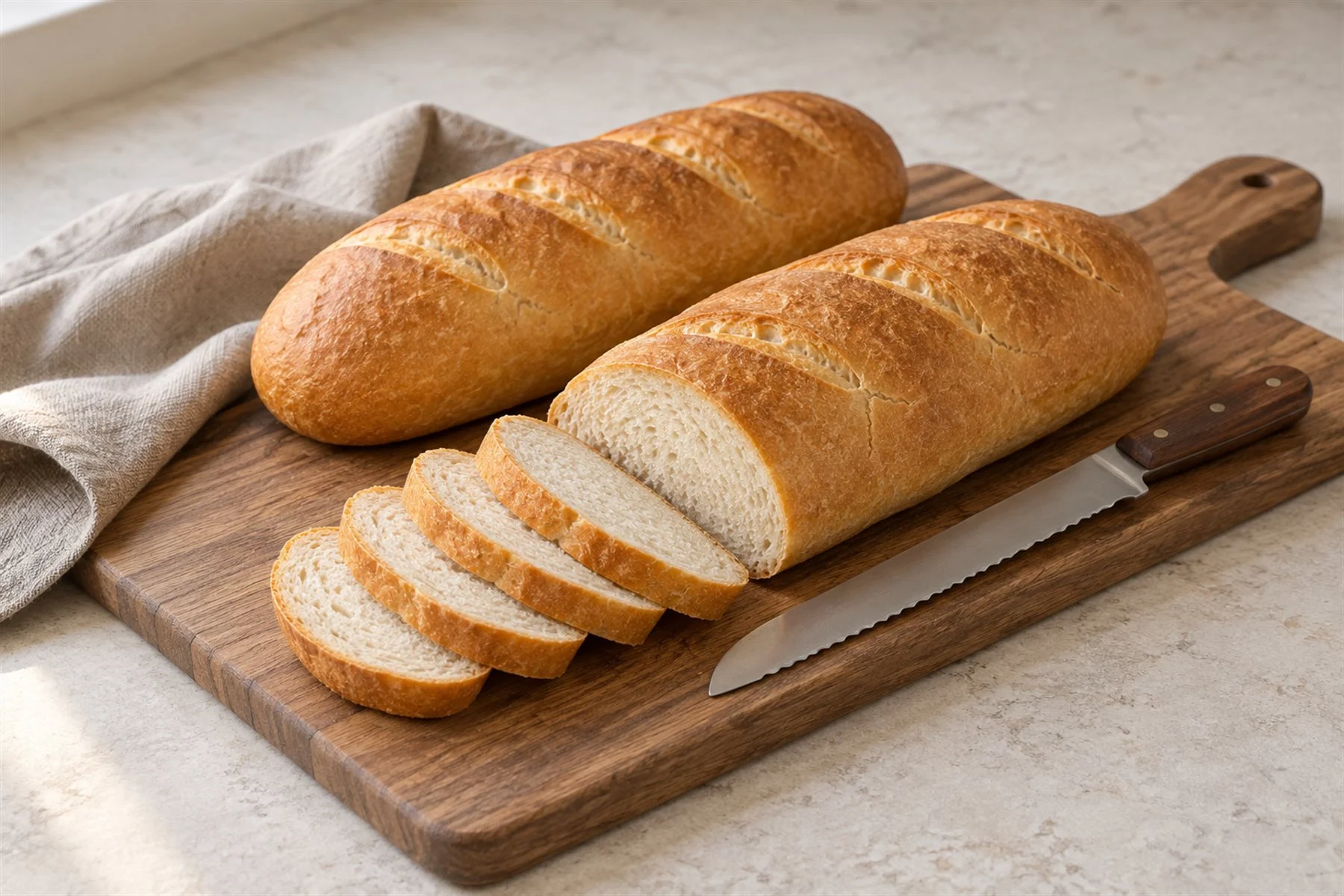
Gluten-free French bread cannot be kneaded and shaped like wheat dough, because there is no gluten to stretch. Instead, this recipe makes a thick, sticky batter-dough that is beaten in a mixer, spooned into two long loaves, smoothed with a wet spatula and given a single rise. It bakes into loaves with a crisp golden crust and a soft, white, sliceable crumb.
Xanthan gum is what holds the gas from the yeast, egg whites add structure and lightness, and a teaspoon of vinegar gives the yeast the slightly acidic conditions it likes. The flour is a gum-free rice-based mix such as this gluten-free all-purpose flour blend; if a store-bought blend already contains a gum, leave the xanthan out.
Steam in the oven and a hot 400°F bake set the crust, and the loaves must cool completely before slicing: a gluten-free crumb stays gummy until the starches have set. A perforated French bread pan gives the roundest shape, but a parchment-lined baking sheet works too.
Gluten-Free French Bread
Ingredients
Method
- Stir the 1 tablespoon sugar and the yeast into the 1 1/2 cups warm water. Let it stand for 5 to 10 minutes, until foamy.
- In the bowl of a stand mixer fitted with the paddle (or in a large bowl, if using a hand mixer with regular beaters), whisk together the 3 cups flour blend, the xanthan gum and the salt until evenly mixed.
- Add the yeast mixture, the 2 egg whites, the 2 tablespoons melted butter and the vinegar. Mix on low speed until combined, scrape down the bowl, then beat on medium-high speed for 3 minutes. The dough will be thick, smooth and sticky, more like a stiff batter than a bread dough. Do not add flour to make it kneadable; it is meant to stay sticky.
- Line a two-loaf French bread pan or a large baking sheet with parchment paper. Spoon the dough into two logs about 12 inches long and 2 1/2 inches wide, keeping them at least 3 inches apart on a baking sheet.
- Dip a rubber spatula in water and smooth each log into an even loaf shape with rounded ends, re-wetting the spatula as needed. Brush the loaves with the 1 tablespoon melted butter. With a sharp knife dipped in water, cut 3 or 4 diagonal slashes about 1/4 inch deep in each loaf.
- Let the loaves rise, uncovered, in a warm draft-free place for 30 to 40 minutes, until puffy and about one and a half times their original size. Do not let them double, or they may collapse in the oven.
- While the loaves rise, heat the oven to 400°F with one rack in the center and an old metal baking pan on the rack below it.
- Put the loaves in the oven and carefully pour 1 cup of hot water into the metal pan underneath to create steam. Close the door at once.
- Bake for 35 to 40 minutes, until the crust is deep golden and firm and an instant-read thermometer in the center reads 205 to 210°F.
- Lift the loaves off the parchment onto a wire rack and cool them completely, at least 1 hour, before slicing with a serrated knife.