This kimchi recipe makes about 1 1/2 quarts of cut-cabbage kimchi from one napa cabbage and half a pound of Korean radish or daikon. The cabbage is salted, rinsed and mixed with a paste of gochugaru (Korean red pepper flakes), garlic, ginger and fish sauce, then packed into a jar to ferment at cool room temperature for 1 to 2 days before it goes into the refrigerator.
Salting is the step that makes the rest work. It pulls water out of the cabbage so it stays crunchy, seasons it all the way through, and creates the salty brine in which the right bacteria thrive. Use plain coarse sea salt or kosher salt, about 2 tablespoons per pound of cabbage, not iodized table salt, and rinse the cabbage three times afterwards so the finished kimchi is not too salty.
During fermentation the vegetables must stay pressed down under their brine, and the jar needs to be opened daily to release gas. Once the kimchi tastes pleasantly sour, and after 2 days at most, it moves to the refrigerator, where it keeps souring slowly. Serve it with rice, in fried rice or soup, or beside homemade egg rolls. For another home ferment, see how to brew water kefir.
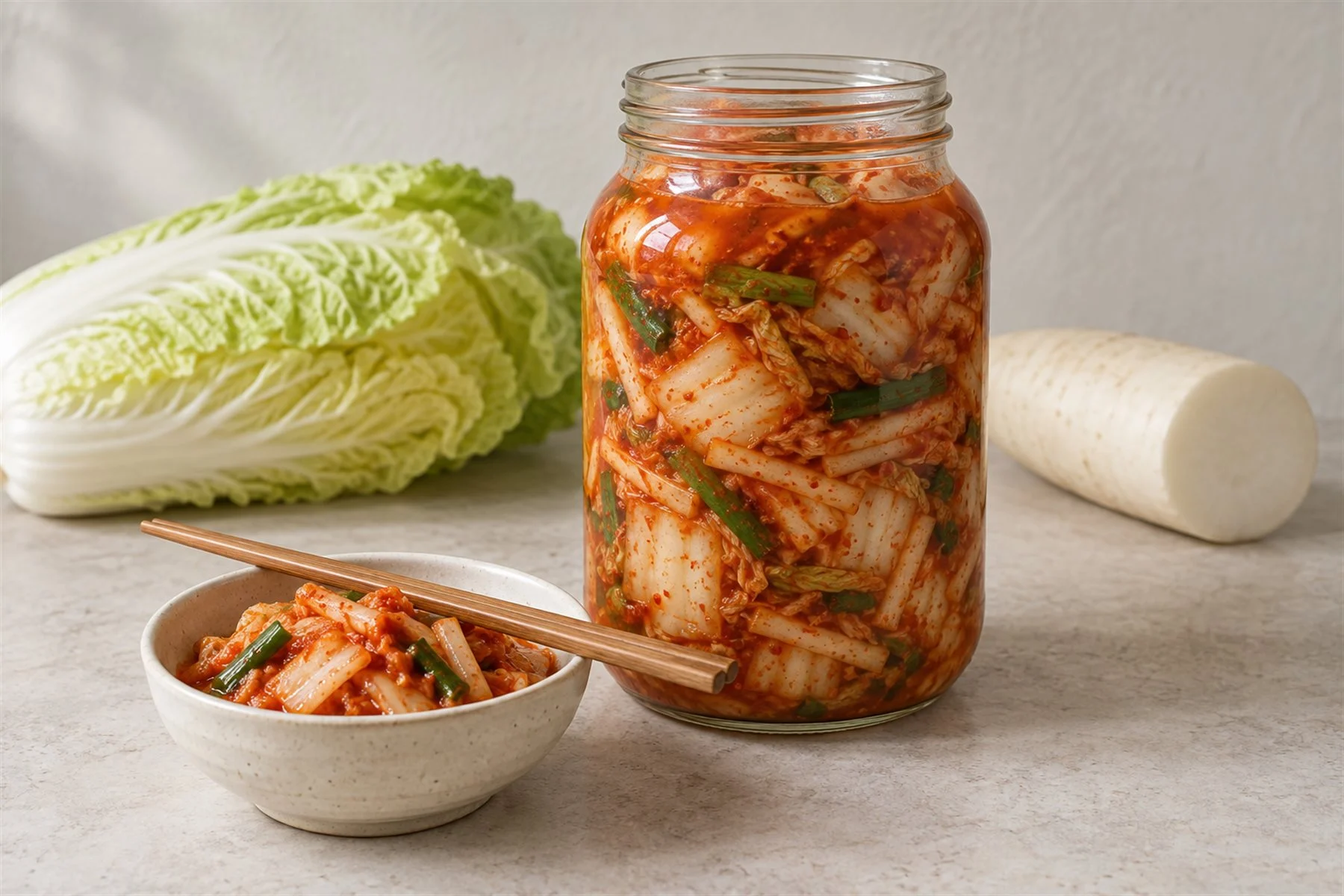
Kimchi (Cabbage and Radish)
Ingredients
Method
- Wash your hands, a very large bowl, a colander, a cutting board and a 2-quart glass jar (or two 1-quart jars) with lids in hot soapy water and rinse well.
- Remove any damaged outer leaves from the cabbage. Quarter it lengthwise, cut out the core, and cut the quarters crosswise into 2-inch pieces.
- Put the cabbage in the large bowl, cover it with cold water and swish it around, then lift it into the colander and let it drip for a minute; the leaves should stay wet so the salt clings. Return the cabbage to the empty bowl in layers, sprinkling each layer with some of the 1/3 cup salt, and toss so the thick white pieces get their share.
- Let stand for 1 1/2 to 2 hours, turning the cabbage over every 30 minutes, until the thick white pieces bend without snapping. If they still snap, give them another 30 minutes.
- Rinse the cabbage under cold running water three times, tossing it well each time. Drain in the colander for 20 to 30 minutes. Taste a piece: it should be pleasantly salty, not harsh. If it is too salty, soak it in fresh water for 10 minutes and drain again.
- In the rinsed and dried large bowl, stir together the garlic, ginger, fish sauce, sugar and gochugaru (1/4 cup for mild to medium heat, up to 1/2 cup for hot), adding 2 to 3 tablespoons water to make a thick, spreadable paste.
- Add the radish matchsticks and scallions and toss to coat. Gently squeeze any remaining water from the cabbage and add it to the bowl. Wearing food-safe gloves to protect your hands from the chili, mix thoroughly until every piece is evenly coated.
- Pack the kimchi into the jar a handful at a time, pressing down firmly with your fist or a clean spoon to push out air pockets, until brine rises over the vegetables. Leave at least 2 inches of space at the top. Wipe the rim and screw the lid on loosely (fingertip-tight) so gas can escape.
- Set the jar on a plate or in a shallow bowl to catch any overflow and leave it at cool room temperature, ideally 65 to 72°F and out of direct sunlight, for 1 to 2 days.
- Once a day, open the jar to release the built-up gas (burp it) and press the vegetables down with a clean spoon so they stay under the brine. Small bubbles, rising brine and a tangy smell are signs that fermentation is under way.
- Start tasting after 24 hours, using a clean utensil each time. When the kimchi is pleasantly tangy, and in any case by the end of the second day, tighten the lid and refrigerate it at 40°F or below. It can be eaten right away; the flavor grows fuller and more sour over the next 1 to 2 weeks in the cold.