Ingredients
Method
Make the dough
- Pour the 1 cup warm milk into a large mixing bowl. Stir in 1 teaspoon of the sugar and the yeast and let stand for 5 to 10 minutes, until foamy.
- Whisk in the rest of the 3 tablespoons sugar and the egg. Add the 3 1/2 cups flour and the 1 1/2 teaspoons salt and stir with a wooden spoon until a rough dough forms. Add the 4 tablespoons soft butter in pieces and work it in with the spoon or by hand.
- Turn the dough out onto a lightly floured counter and knead for 8 to 10 minutes, until smooth, stretchy and soft. The dough should stay slightly tacky; if it is still sticking to the hands after 5 minutes, knead in more flour 1 tablespoon at a time. In a stand mixer with the dough hook, knead on medium-low speed for 6 to 8 minutes instead.
- Shape the dough into a ball, put it in a buttered bowl and turn it once to coat. Cover and let rise in a warm place until doubled, 1 to 1 1/2 hours.
Shape and rise
- Butter a 9x13-inch baking pan.
- Press the dough down to deflate it and turn it out onto a clean counter. Divide it into 12 equal pieces, about 68 g each.
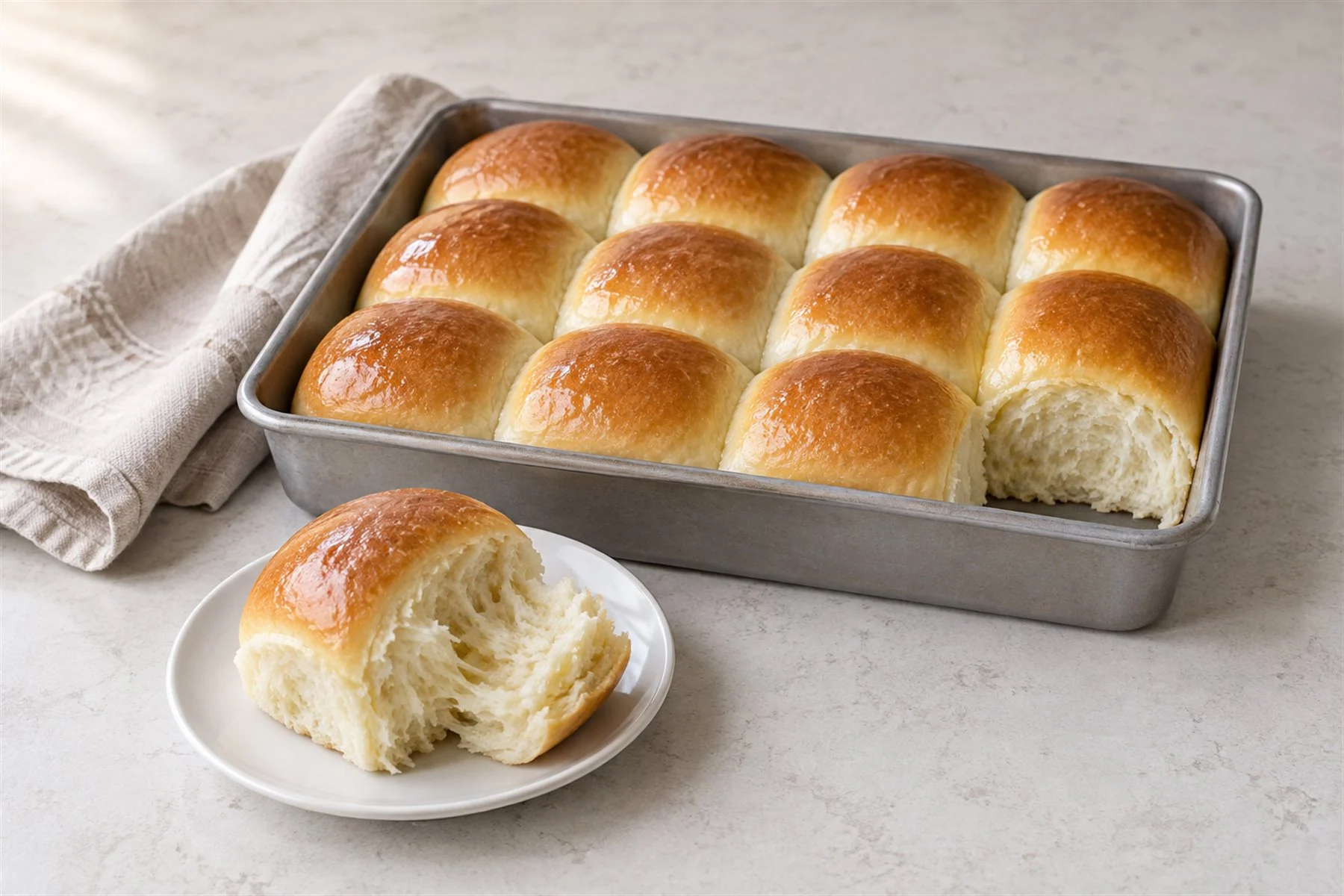
- Shape each piece into a smooth ball: pull the edges underneath and pinch them together, then roll the ball under a cupped hand against the counter to tighten the surface. Arrange the balls seam side down in the pan in 3 rows of 4.
- Cover the pan loosely and let the rolls rise until puffy and touching each other, 45 to 60 minutes. Meanwhile, heat the oven to 375°F with a rack in the center.
Bake
- Bake for 20 to 24 minutes, until the tops are evenly golden brown and an instant-read thermometer in a center roll reads 190°F. If the tops brown too quickly, lay a sheet of foil loosely over the pan for the last few minutes.
- Brush the hot rolls with the 1 tablespoon melted butter. Let them cool in the pan for 10 minutes, then serve warm or turn out onto a wire rack to finish cooling.
Notes
Overnight option: shape the rolls and arrange them in the buttered pan, then cover the pan tightly with plastic wrap and refrigerate for up to 16 hours. The next day, let the pan stand at room temperature for 1 to 2 hours, until the rolls are puffy and touching, then bake as directed.
Flour measured by scooping the cup into the bag can weigh 20 percent more than spooned and leveled flour and makes a stiff dough and dense rolls. Weigh the flour if possible, or fluff it, spoon it into the cup and level it off.
For a shiny, deeper brown top, brush the risen rolls with 1 egg beaten with 1 tablespoon milk just before baking, and skip the melted butter.
Store cooled rolls in a bag at room temperature for up to 2 days, or freeze for up to 3 months. Rewarm, wrapped in foil, in a 300°F oven for 10 to 15 minutes.
For a heartier bread on the same table, see this old-fashioned whole wheat potato bread.