Ingredients
Method
Potato mixture
- Put the 1 1/2 cups water and the potato in a saucepan and bring to a boil. Once boiling, put a lid on the pan and cook at a boil on medium heat for 12 minutes, until the potato is very tender.
- Take the pan off the heat and empty it, water and all, into a bowl. Work the potato into the water with a masher until the puree is smooth and free of lumps.
- Measure the puree. It should come to 1 3/4 cups: top it up with water if it falls short, and set any extra aside for another use.
- Return the puree to the pan and add the buttermilk, butter, sugar and sea salt.
- Warm the mixture over low heat, or let it cool, until an instant-read thermometer reads 120 to 130°F; any hotter can harm the yeast. Take the pan off the heat.
Dough, by hand
- Mix the two flours together in a bowl.
- In a second bowl, stir 2 cups of the flour mixture together with the yeast. Pour in the potato mixture.
- Beat with an electric hand mixer on low speed for 30 seconds, then on high speed for 3 minutes. Without a mixer, beat hard with a wooden spoon or a Danish dough whisk for about 3 minutes, until the batter looks smooth and stretchy.
- Stir in as much of the remaining flour mixture as the spoon can manage, then turn the dough out onto a floured surface and knead in the rest. Keep kneading for about 8 minutes, until the dough is smooth and elastic.
- Form the kneaded dough into a ball and set it in a greased bowl, turning it once so the surface is greased.
- Drape a clean towel or plastic wrap over the bowl and set it somewhere warm to rise until doubled in size, about 45-60 minutes.
Dough, with a stand mixer
- Mix the two flours together. In a large bowl, stir 2 cups of the flour mixture together with the yeast, then pour in the potato mixture.
- Using the paddle attachment, beat at moderate speed for 30 seconds, then at high speed for 3 minutes.
- Add the rest of the flour and, still using the paddle, mix at low speed. Change to the dough hook and let it knead for about 8 minutes.
- Lightly flour the work surface, knead the dough briefly to form a ball, and put it in a greased bowl, turning it once so the surface is greased.
- Drape a clean towel or plastic wrap over the bowl and set it somewhere warm to rise until doubled in size, about 45-60 minutes.
Shape and bake
- Punch the risen dough down to deflate it. Divide it into two portions, cover with a clean towel and let rest for 10 minutes.
- While the dough rests, grease two 8x4-inch loaf pans.
- Shape each portion into a loaf: pat it into a rectangle about 8 inches wide and roll it up tightly into an 8-inch log, pinching the seam closed. Set the loaves seam side down in the pans, cover, and let them rise for about 30 minutes, until almost doubled and crowned just above the rims. Meanwhile, heat the oven to 375°F.
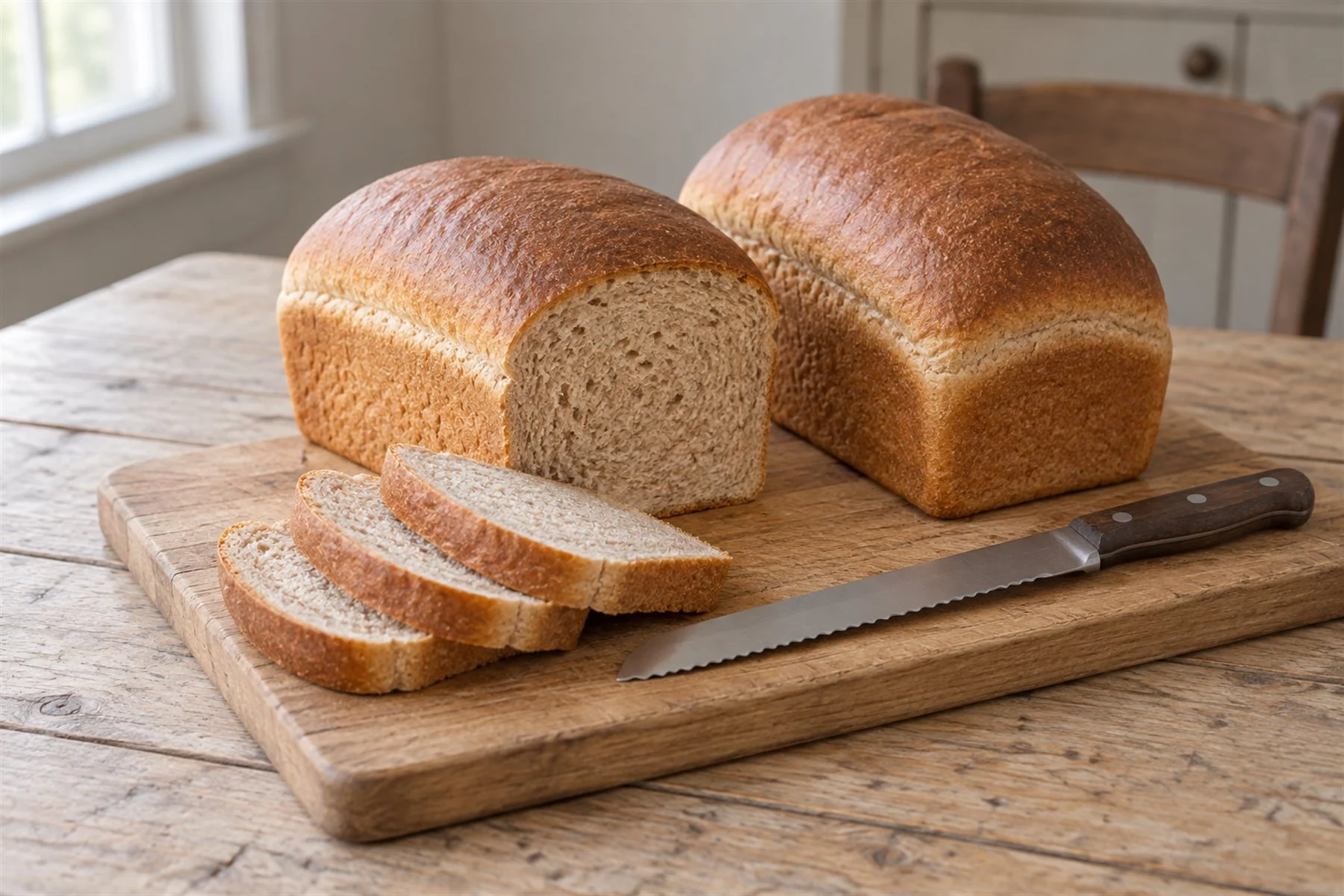
- Bake for about 40 minutes, covering the loaves with foil for the last 15-20 minutes so they do not overbrown. The bread is done when the crust is golden brown and an instant-read thermometer in the center reads 190 to 200°F.
- Turn the loaves out of the pans onto a wire rack and let them cool completely, at least 1 hour, before slicing.
Notes
Prepare the dough either by hand or with a stand mixer; the two methods use the same ingredients and timings.
To make soured milk in place of buttermilk, stir 2 teaspoons lemon juice or vinegar into 1 cup milk, let it stand a few minutes, then use it in the recipe.
Rising time: about 45-60 minutes for the first rise, a 10-minute rest, and about 30 minutes in the pans.
Equipment: an instant-read thermometer and two 8x4-inch loaf pans.
Store the cooled loaves in a bag at room temperature for up to 3 days, or wrap and freeze them for up to 3 months.