Ingredients
Method
By hand
- Give the water a short spell in the freezer so it is icy by the time it goes into the dough.
- Dice the butter small, then freeze the cubes for 30 minutes until they are very cold.
- Stir the flour and salt together in a bowl. Cut in the butter with a pastry blender, a fork or a knife until the mixture looks like small, coarse crumbs.
- Add the water 1 tablespoon at a time, stirring with a fork after each addition. Stop adding water once the dough starts to hold together and form a ball.
- Gather the dough into a ball and press it into a flat disc. For a doubled recipe, halve the dough first and form two balls, pressing each one into its own disc.
- Cover the dough tightly in plastic wrap (each disc separately, if doubled) and let it rest in the refrigerator for 30 minutes.
- Roll out the chilled dough between two sheets of wax paper, or on a lightly floured pastry cloth, into a 12-inch round about 1/8 inch thick for a 9-inch pie plate.
In a food processor
- Give the water a short spell in the freezer so it is icy by the time it goes into the dough.
- Dice the butter small, then freeze the cubes for 30 minutes until they are very cold.
- Place the flour and salt in the food processor bowl. Add the butter, close the lid, and run short pulses until the mixture looks like small, coarse crumbs.
- Pulsing as you go, add the water through the feed chute 1 tablespoon at a time. Stop once the dough starts to hold together and form a ball.
- Gather the dough into a ball and press it into a flat disc. For a doubled recipe, halve the dough first and form two balls, pressing each one into its own disc.
- Cover the dough tightly in plastic wrap (each disc separately, if doubled) and let it rest in the refrigerator for 30 minutes.
- Roll out the chilled dough between two sheets of wax paper, or on a lightly floured pastry cloth, into a 12-inch round about 1/8 inch thick for a 9-inch pie plate.
To blind-bake a single crust
- Ease the rolled dough into a 9-inch pie plate without stretching it. Trim the overhang to 1/2 inch, fold it under and crimp the edge.
- Freeze the shaped crust for 30 minutes, until firm. Chilling helps keep the pastry from shrinking down the sides of the pan.
- Heat the oven to 400°F with a rack in the lower third.
- Line the frozen crust with parchment paper or foil, pressing it into the corners, and fill it to the rim with pie weights, dried beans or uncooked rice. Set the plate on a rimmed baking sheet.
- Bake for 15 to 20 minutes, until the edge is set and just starting to color. Carefully lift out the paper and weights.
- For a partially baked crust, used for custard fillings such as pumpkin that finish baking in the crust: bake for 5 minutes more, until the bottom looks dry. Leave the base unpricked so a liquid filling cannot seep underneath, and fill it while warm or cooled, as the pie recipe directs.
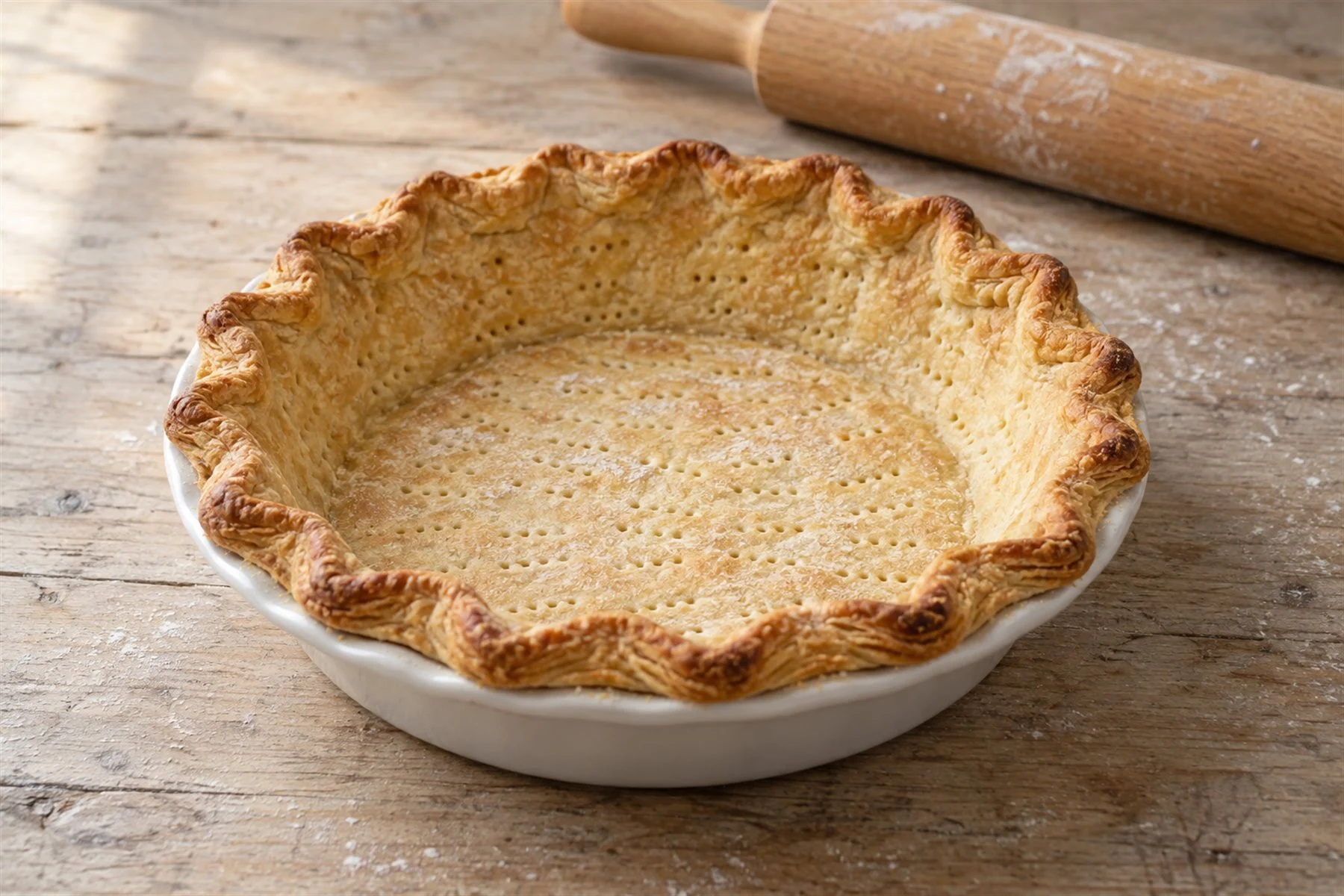
- For a fully baked crust, used for fillings that are not baked, such as cream pies: prick the bottom all over with a fork and bake for 10 to 15 minutes more, until golden brown all over. Let it cool completely on a wire rack before filling.
Notes
For a double-crust pie, double all of the ingredients and follow either method, dividing the dough into two equal discs before chilling.
The amount of water varies from 3 to 5 tablespoons; add only enough for the dough to come together.
The chilling time counts 30 minutes for freezing the butter and 30 minutes for resting the dough. Blind baking adds 30 minutes in the freezer and 20 to 35 minutes in the oven.
Make-ahead: tightly wrapped discs keep for up to 2 days in the refrigerator or 2 months in the freezer; thaw frozen dough overnight in the refrigerator. If well-chilled dough cracks as it is rolled, let it stand at room temperature for 5 to 10 minutes first.